1. Get Close — Really Close
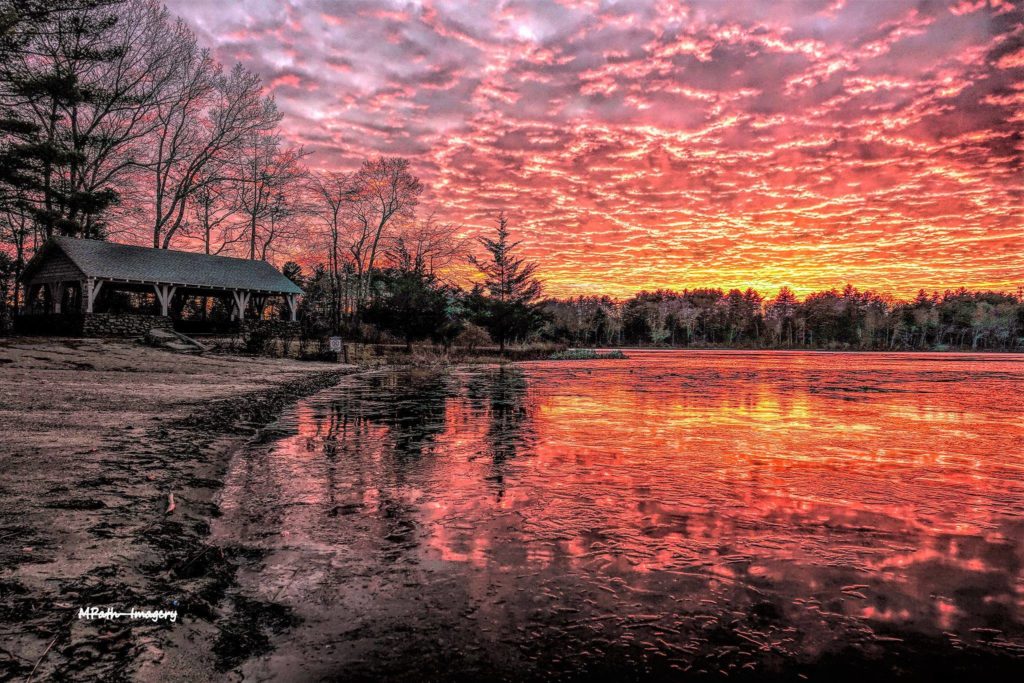
I love photographing subjects up close about half the time. Why? Because getting close adds detail. The photo that accompanies this post wasn’t zoomed in at all, and that’s exactly why I like it. You see more of the sunset, more of the color variations, more of the atmosphere.
If I zoomed in on a single yellow patch in the distance, that’s all you’d see — just yellow. And while monochrome color has its uses, I prefer the kaleidoscope of tones across the horizon.
There’s another reason to avoid zooming: lenses retain more detail up close than they do far away. Zooming amplifies atmospheric distortion, haze, and softness. Staying close keeps things crisp.
2. Shoot During Golden Hour and Blue Hour
These are my favorite times to shoot because the colors are magical. Golden Hour and Blue Hour — roughly an hour before and after sunset — give you the most dramatic, natural light.
Before that? Too bright. After that? Too dark.
There are exceptions, of course, but if you want a simple rule to remember, this one will serve you well.
3. Use Filters (Both Physical and Digital)
Filters can mean two things: the physical ones you screw onto your lens, and the digital ones you apply in editing.
My favorite physical filter is the star filter. It creates star-shaped bursts on bright light sources at night — streetlights, headlights, anything with a glow. They come in different varieties: 4‑point, 6‑point, 8‑point. I prefer the 8‑point because it looks the most natural.
Other filters I use occasionally:
-
Polarizing filter
-
Neutral density filter
-
Graduated neutral density filter
One day I might write a full post just about filters — there’s a lot to say.
4. Shooting in Winter
As I write this, it’s winter — and while I’m not a huge fan of the cold, I dress for it like you wouldn’t believe. Layers, gloves, hand warmers… whatever it takes to stay out long enough to get the shot.
If you don’t dress warm enough, you’ll be heading back to the car fast.
Winter also brings snow, which creates beautiful scenes. And winter sunsets? They tend to be more dramatic. Not necessarily better — just more intense, and more often.
5. Gratitude Matters
These are just a few of my favorite things about photography. I’m truly grateful to everyone who follows my Facebook, Instagram, or this WordPress page. I’m not a technical camera nerd — I’m just an old soul who loves art and loves that people enjoy what I shoot.
For that, I’m eternally grateful.
Thanks for the tips!
Great tips, thanks and I am a landscape, nautical photographer as we live on the coast of Swampscott, MA
Your picture shown here are stunning. Thank your for the tips. I too enjoy the coast i live on. Love photography & learning from others to improve with every click.